
Fragmented fleet operations and lack of real-time control
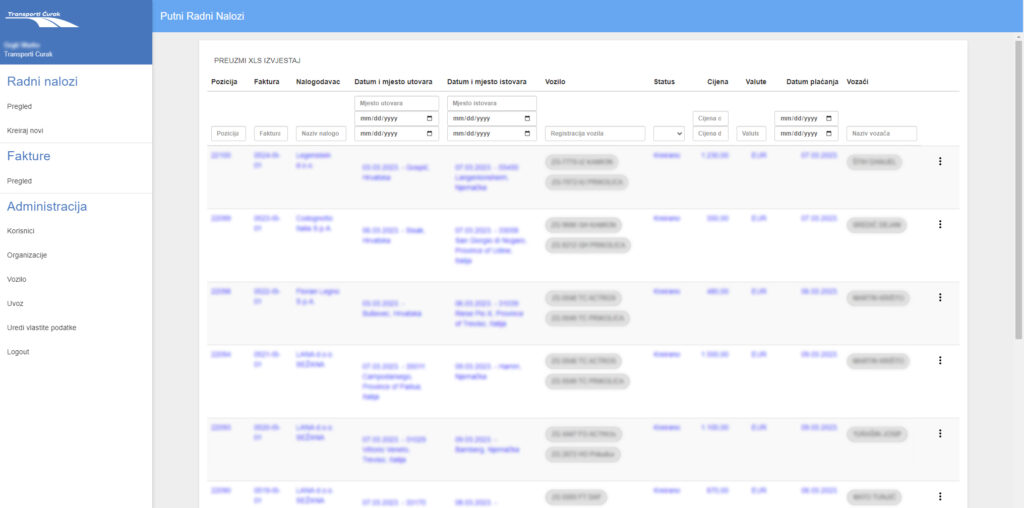
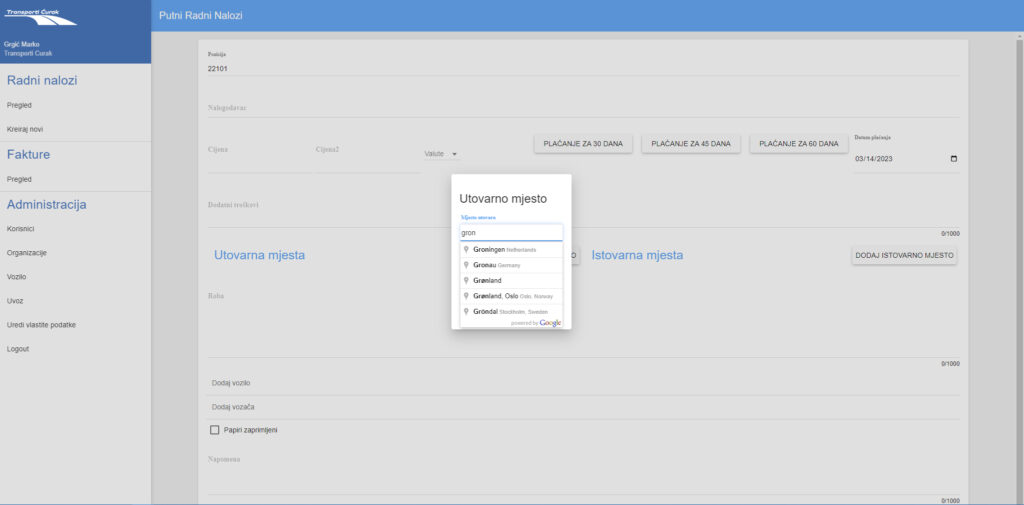
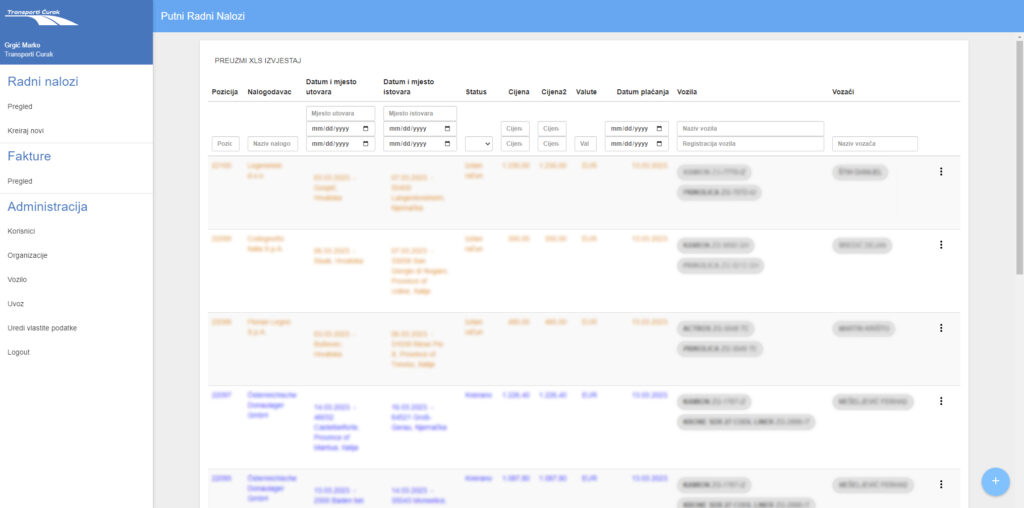
Transporti Ćurak relied on manual fleet management processes to coordinate daily transport operations, including dispatching, vehicle tracking, driver assignments and invoicing. As the business scaled, these processes became increasingly inefficient, error-prone and difficult to manage.
Without a centralized fleet management system, the company lacked real-time visibility into vehicle locations, route execution and operational status. Dispatching decisions were based on incomplete or delayed information, leading to suboptimal routing, increased fuel costs and reduced delivery efficiency.
Manual data handling across spreadsheets and disconnected tools created operational bottlenecks and increased administrative workload. Invoicing processes were particularly time-consuming and prone to errors, impacting cash flow and financial accuracy.
As fleet complexity grew, it became clear that a scalable fleet management software solution was required – one that could centralize operations, automate workflows and provide real-time insight into the entire logistics process.
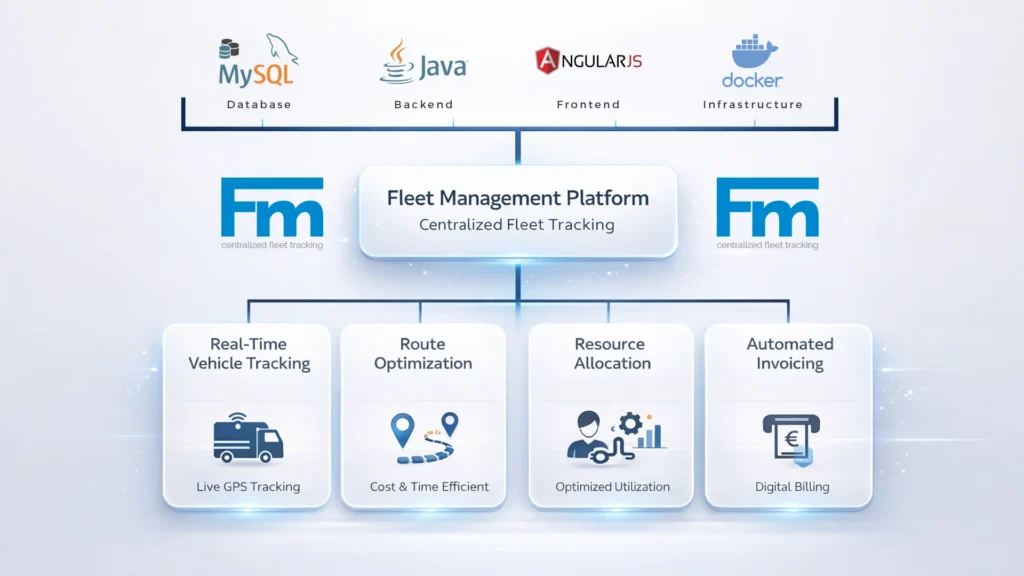
 MySQL
MySQL
 Java
Java
 Spring Boot
 Angular
 Docker
 REST APIs
 Google Maps API